


As a consultant, I need to become a quick study on new sectors and their associated regulatory regimes. This can sometimes be daunting. When confronted with a new policy area or sector, where do you start?
These days, I start with ChatGPT. That’s because ChatGPT can be a very effective teacher on complex topics.
Today, I’ll show you how I used ChatGPT to help me grow my knowledge base and understanding of a complex regulatory environment.
In previous tutorials, I’ve tackled the problem with a clear objective and perspective for the end product. However, learning is entirely different. Sometimes, I honestly don’t know where to start, and need a guiding hand. And that’s what I do with the prompts in today’s guide, which I’ve designed to be easily applied, not matter the regulatory topic you’re interested in learning about.
Let’s roll up our sleeves!
Step 1: Start wide
In this early stage, I don’t know what I don’t know. Which means I need to start with broad prompt and dig deeper once I see where my knowledge gaps are.
For this use-case, I used Canada’s regulatory regime for resource development.
I'd like you to help me learn about the regulatory regime in Canada around resource development.
Here’s the same prompt as a template you can copy and adjust.
I'd like you to help me learn about the regulatory regime in [jurisdiction] around [topic].
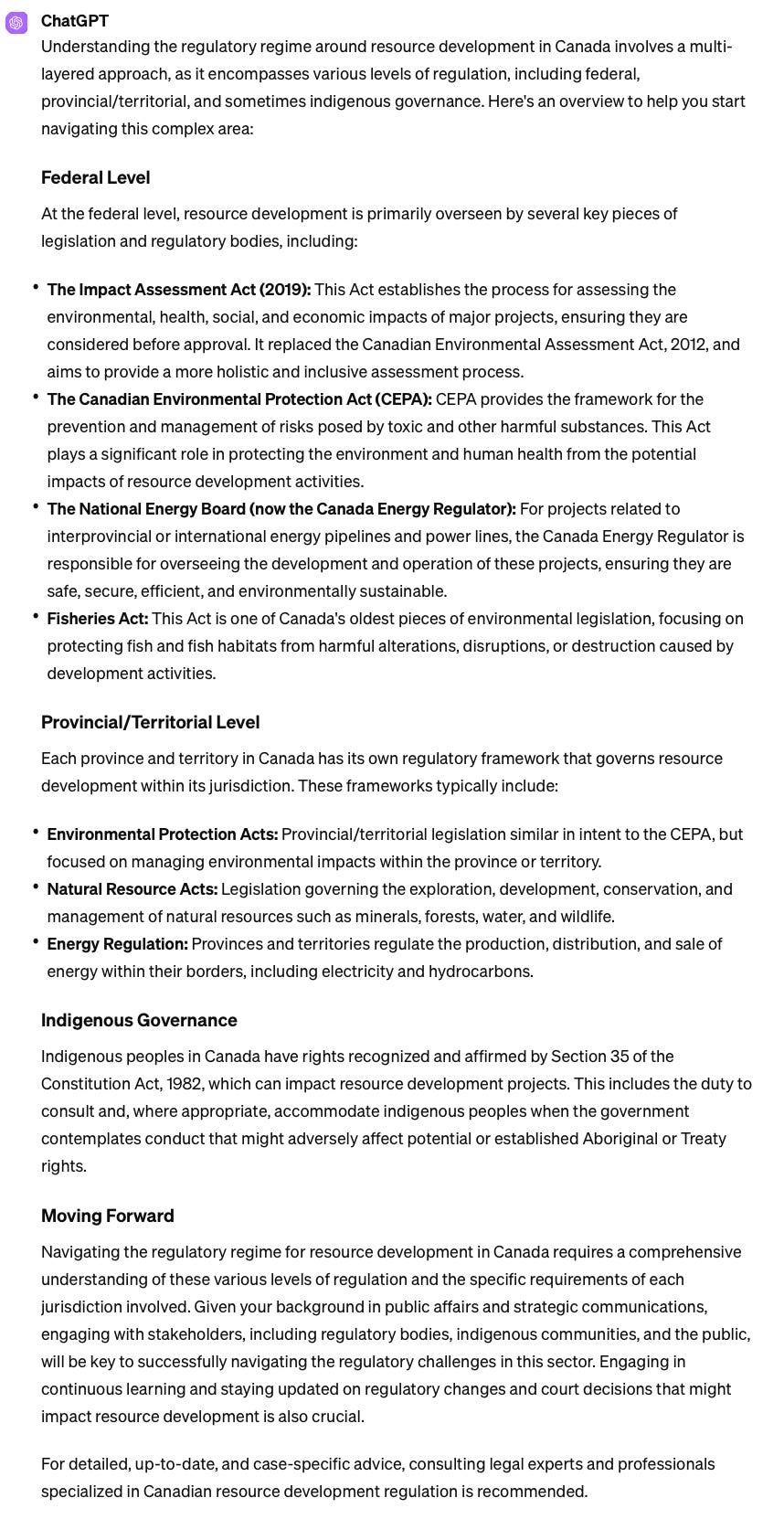
The response I got was just what I needed: a broad overview of key acts across jurisdictions. But to become a fast study on the topic, I’ll need to dig into each of these acts in more detail.
I have three initial questions I want to explore for each Act:
Impact on industry
Industry response
Timeline of when each Act is up for review.
Here’s how that looks in a prompt:
I am a public affairs professional and I need to become an expert on these topics quickly. Can you breakdown the overview into bite-sized pieces. For each topic, provide context from a public affairs perspective.  Here are questions I have that I'd  like answers on for each topic:

1. What impact have these acts had on the industry?
2. What public statements have industry and stakeholders on these acts/topics?
3. When are these acts up for review?
ChatGPT focused on the federal acts, which is fine, as I asked it to break things down for me in bite-sized pieces, so I’m not miffed that it didn’t provide me with this information proactively. I can just follow-up with that ask in my next prompt.
Step 2: Dig Deeper
Now it’s time to dig deeper.
In the case of the first act identified by ChatGPT, I’ve learned that it has “increased the complexity and duration of the approval process for projects, requiring industries to undertake more comprehensive planning and engagement activities from the outset.”
I want to learn more about this, but I also don’t want to lead it, so I’ve designed a prompt that is deliberately neutral. Rather than ask it to explain to me how the act has increased the complexity of the approvals process. Here’s how I structured my next prompt:
Please help me build a deeper understanding of each of these acts. Let's do one act at a time so that we can get detailed, and I don't get overwhelmed.  Let's start with the first one:

-Impact on Industry: provide me with more detail and the facts you used to come up with your assessment.
- public statements: please go a level deeper and give me details from specific organizations or individuals.
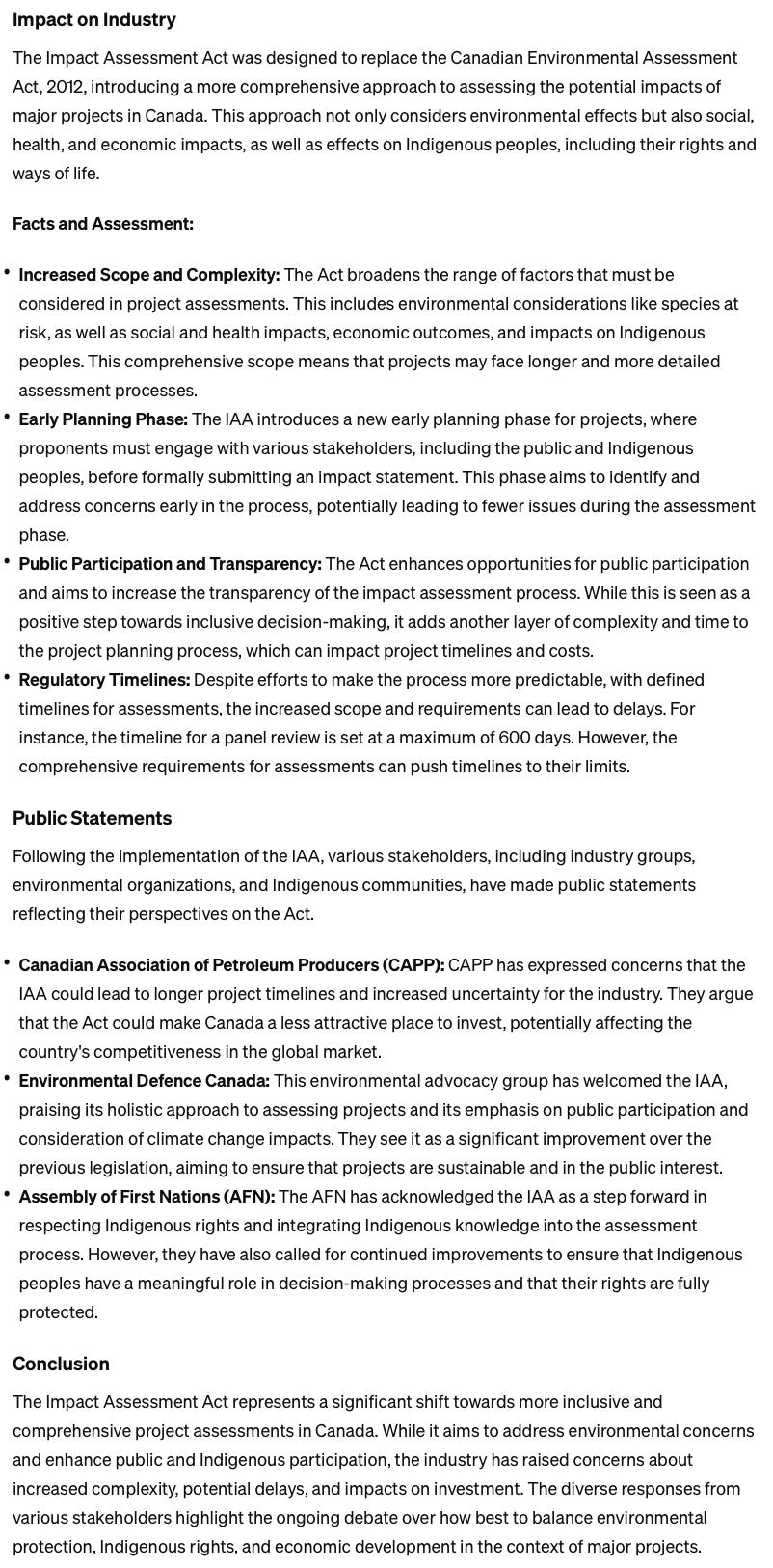
As you can see, I’m peeling back a layer of the onion with every prompt. Within minutes, I’ve gone from:
Not knowing an act existed in the first place, to
A surface level understanding of what it is, to
A high-level view of the specific aspects of the act that have been the focus of industry players, to
An understanding of which major stakeholders lobbied or campaigned for or against aspects of the act.
This isn’t enough though. I want to understand the history, and the motives for why some of these acts came to be.
Can you tell me why this act was introduced? What problems did it seek to solve? What opportunities did it seek to unlock? What were the political motives of the government at the time?
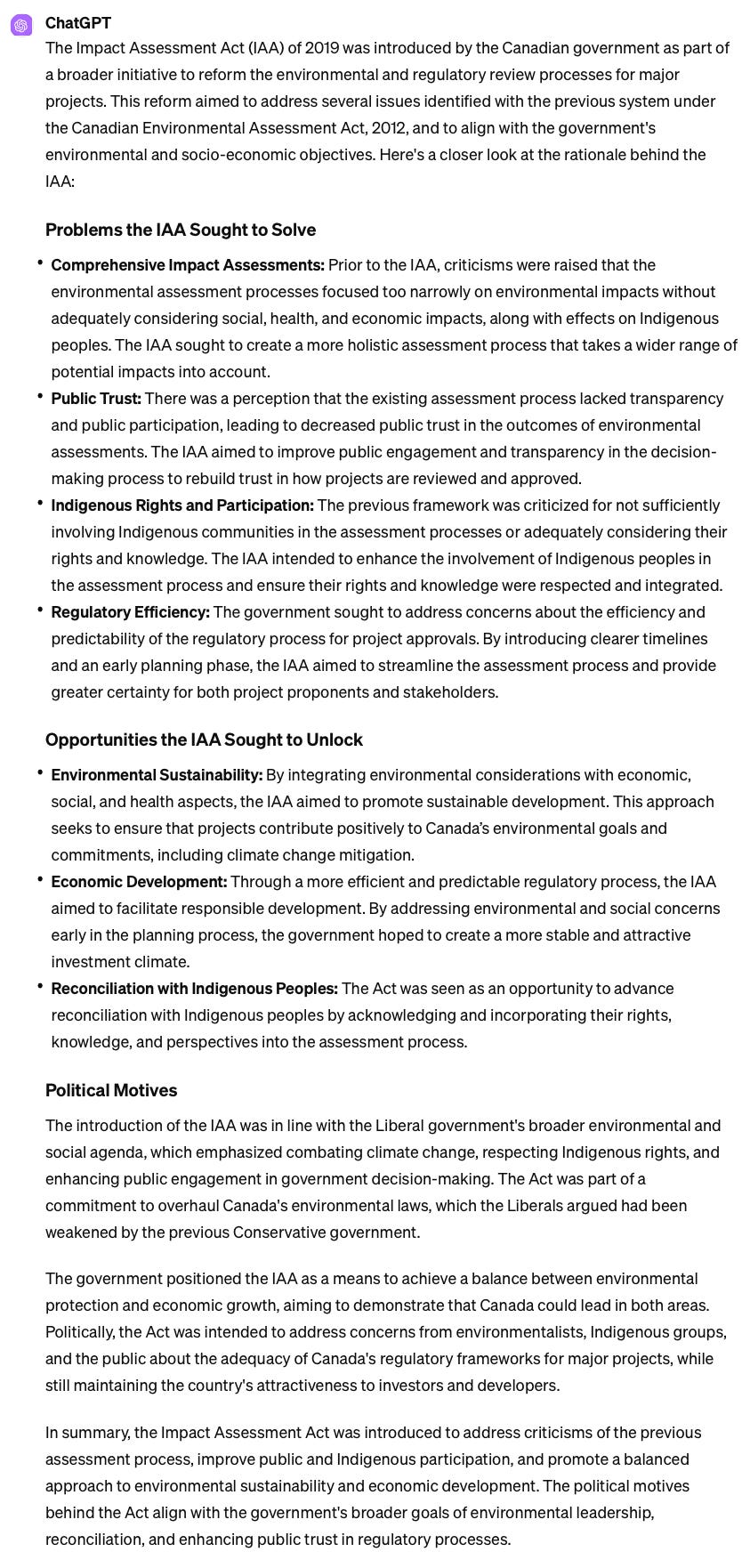
From here, I could dig much deeper. You’ll want to ask questions that are specific to your use case, but I would focus on contextual follow-up, which is specific to this topic. For example, I’d explore how Indigenous communities have responded to the Act, and explore the specific approvals process for resource development projects. I’ve not included these examples as they’re not replicable across other topics.
Step 3: Create flashcards
Having now assembled useful information about the regulatory process on this topic, I want to make sure I actually retain the information. We all have our own ways of studying and absorbing information, but I find flashcards to be useful, as they force me to distill information to its core points.
As I’ve done with recent guides, I use a Generated Knowledge prompt to help frame the next tasks in a way that will be productive:
I'd like you to create flashcards that I can use to study the information you have provided me. Before we start, do you know how to structure am effective flashcard ?
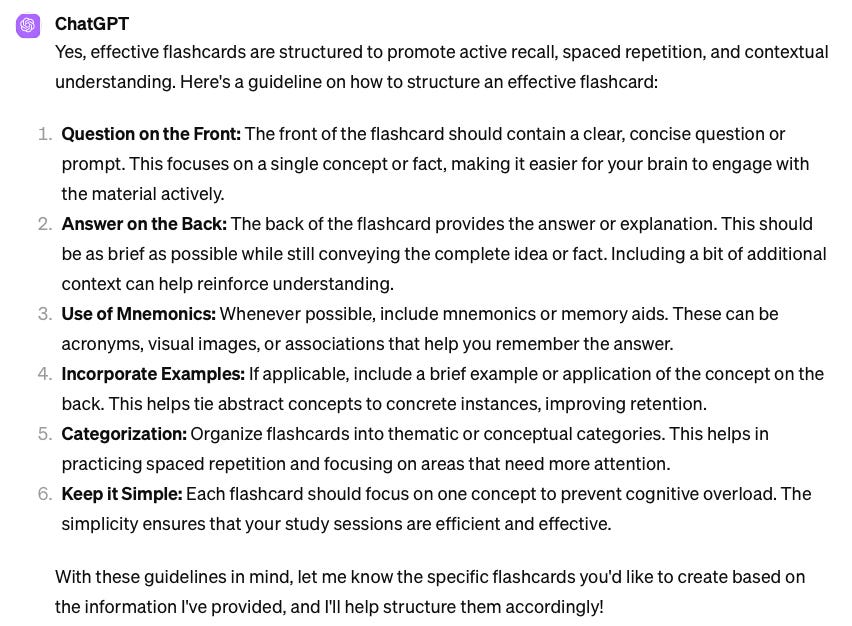
And now the fun part:
Great. I'd like you to create three different flashcards for the Impact Assessment Act:

1. What the Act is
2. Stakeholder Positions on the IAA
3. Political Context.

Let's break this down in steps and start with the first Flashcard. Can you please create the first flashcard, "What the Act is" ?
Here is a templated version you can edit for your own needs:
I'd like you to create three different flashcards for the [Name of the Act ot Regulation]:

1. What the Act [or regulation] is
2. Stakeholder Positions on the [Name of the Act]
3. Political Context.

Let's break this down in steps and start with the first Flashcard. Can you please create the first flashcard, "What the Act is" ?
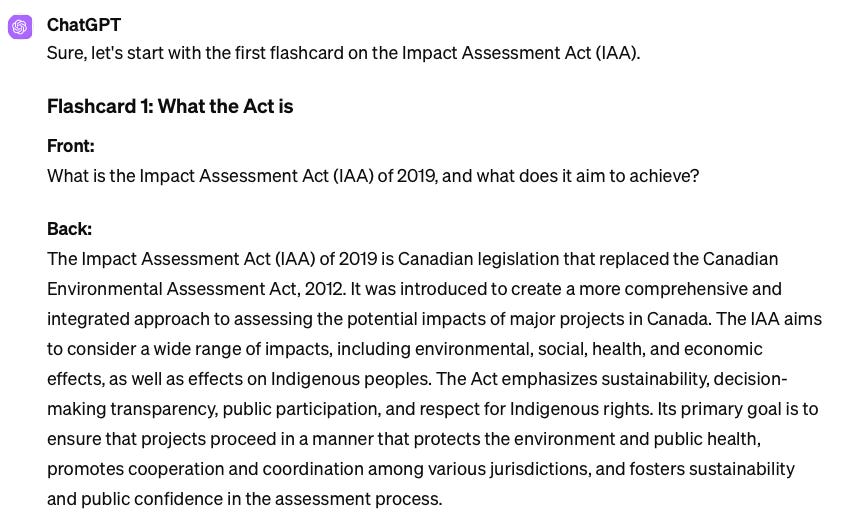
From here, you ask ChatGPT to move on to the next flashcard. Rinse/repeat for each topic or act you want to learn more on, and you’ve got yourself a great set of notes to work from.
Great, please proceed to the next flashcard
Of course, if we really want to learn, we need to test our knowledge.
Step 4: Test your knowledge
Have ChatGPT ask me questions I answer and it corrects me on.
I'd like you to help me study the [name of the act.

I would like you to start by identifying 10 questions about the act that I should be able to answer, based on the information you have provided me.

After you generate these questions, I will provide you with additional direction.
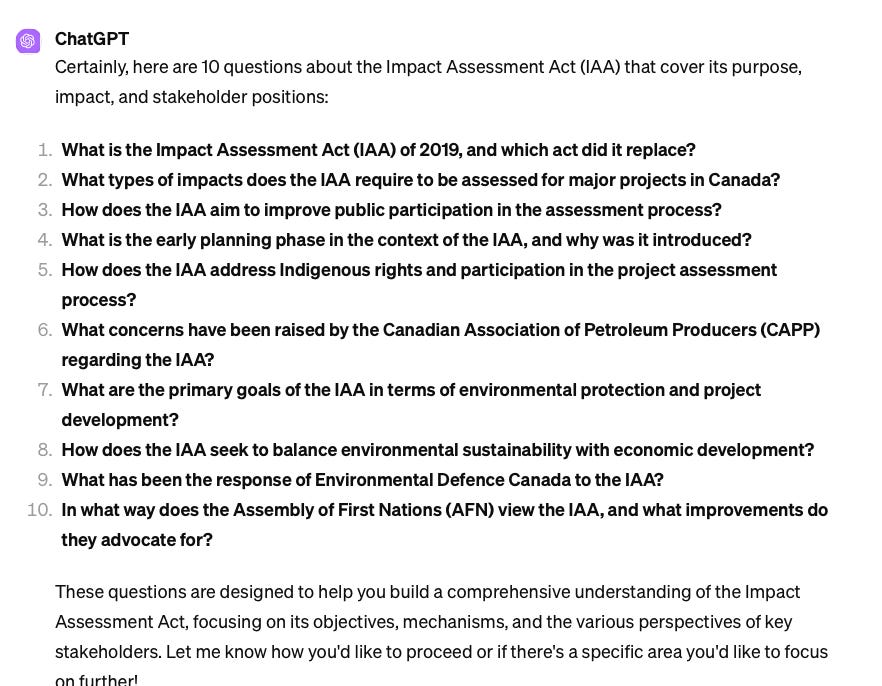
And then:
Great. Now we will proceed, one question at a time. For each question, we'll do this:

1. You ask me the question.
2. I provide an answer.
3. You review my answer.

Are you ready to proceed?
ChatGPT then proceeded to ask me the first question. I replied and got this:
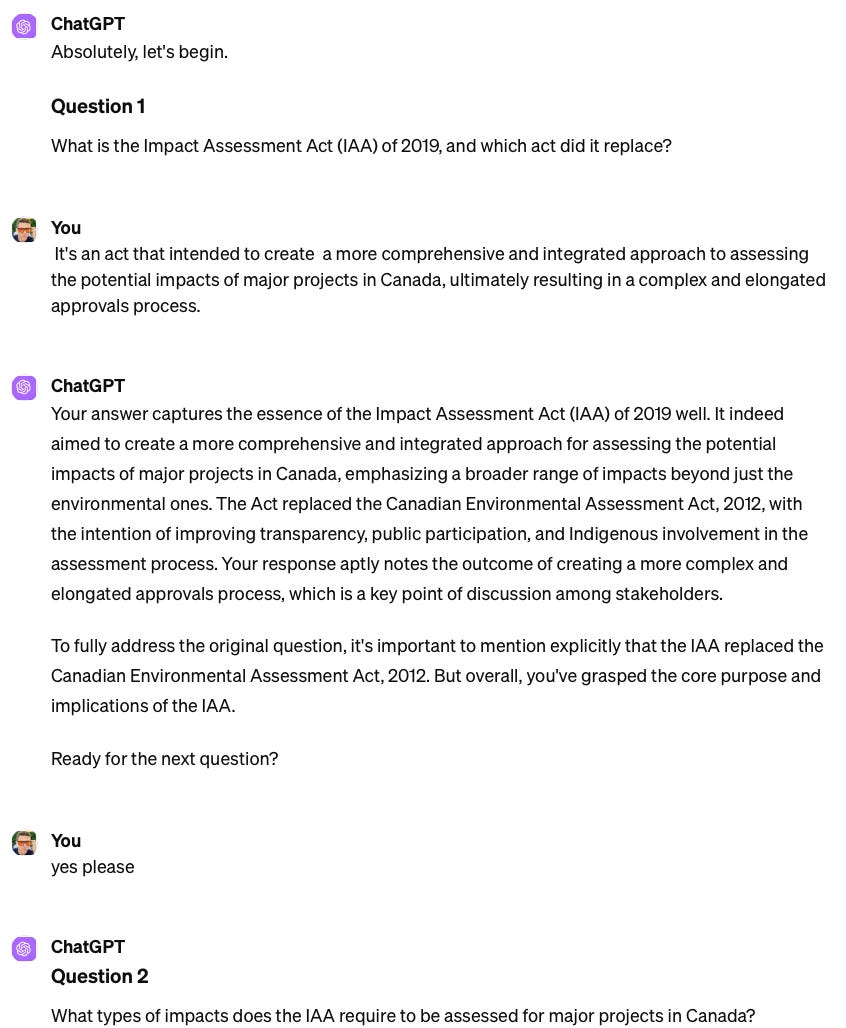
Suddenly I have the perfect study partner.
And hopefully, stronger knowledge on a topic I knew little about at the start!