


I cannot hang a picture frame on the wall. Every time I try, it’s a total disaster. I’m the least handy man my wife could have married.
So you can imagine how accomplished I felt last weekend when I used my bare hands to build an app.
I called it Earmarked. It pulls my podcast feeds, runs AI analysis on each episode, and surfaces an executive summary and key takeaways before I’ve finished my first coffee. I built the first functioning version in under an hour, using Claude to develop the brief and Replit to do the build. By Monday morning it had already changed how I started my day.
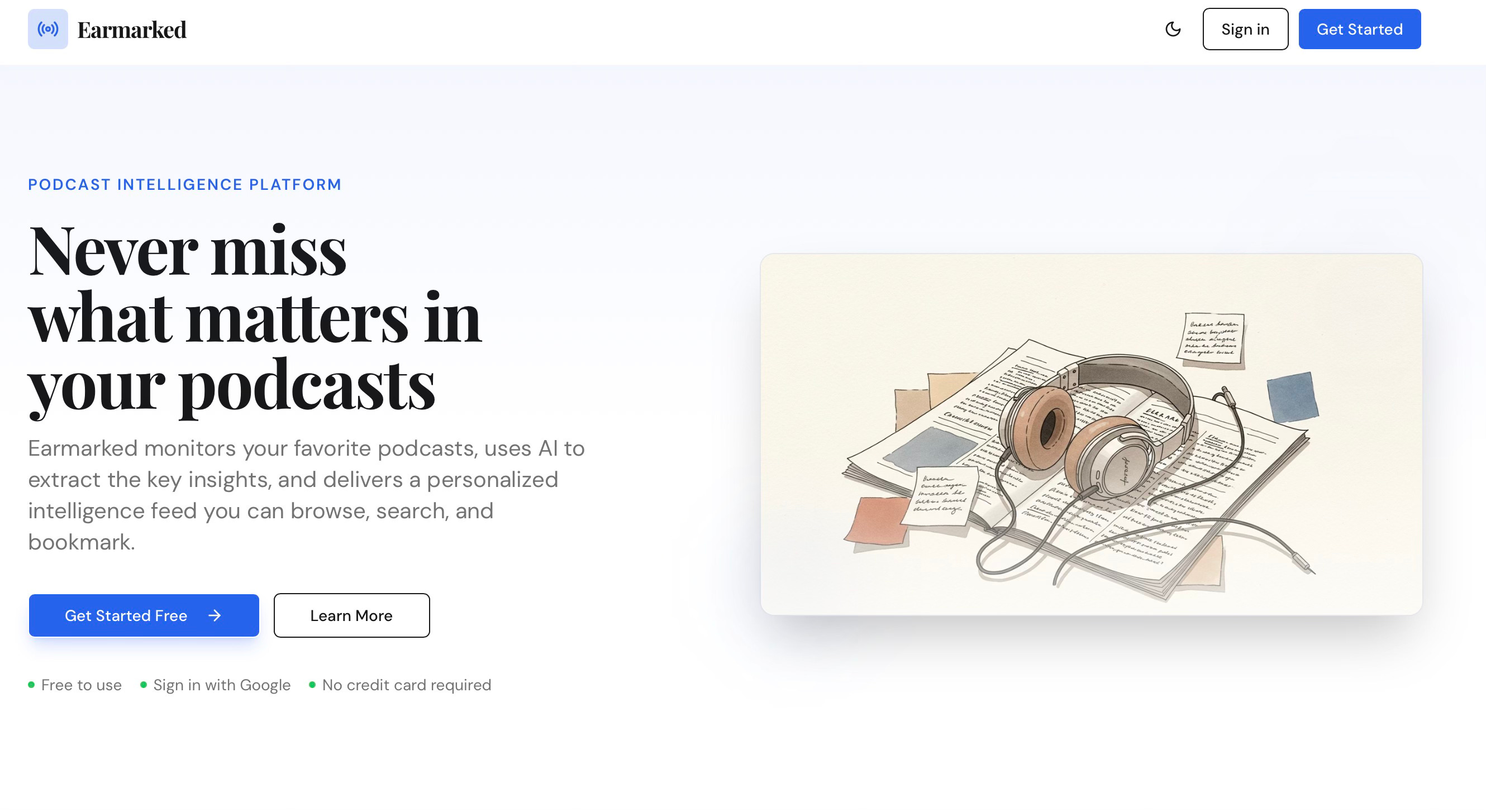
Fair warning, if you click on that link and choose to sign-up for the app, do so at your own risk. This isn’t a public-facing app, and I have no intentions of maintaining it beyond my own personal needs.
I’ve since thought about what that means — for me, for the practitioners I work with, and for anyone in public affairs who’s been watching the AI wave roll in and wondering where exactly they’re supposed to stand.
The idea came from a thread at the office. We’d been talking about how The New York Times built a custom application to aggregate content from the manosphere. One of my colleagues flipped it to me—I help oversee our in-house AI platform—and asked whether we could build something similar. I thought it was a brilliant idea and added it to our product roadmap.
Then I thought about what comes next. Getting something built means back and forth with our engineer—messages, calls, trying to describe in words something that doesn’t yet exist. While our engineer does amazing work with very little direction, I nonetheless decided this was a great opportunity to finally give vibe coding a try and build a prototype he could react to.
It didn’t come without a few hiccups here and there. One podcast was only serving up opening credits instead of a full transcript, so my Replit AI built a workaround that pulled YouTube transcriptions directly into the app. Longer episodes were inconsistent—the original build hadn’t planned for them. Each time something broke, I described the problem in plain language and watched the AI troubleshoot it in real time, sharing its thinking as it worked. That part, I’ll admit, still feels a little like watching something that shouldn’t be possible.
Before Earmarked, I was consuming podcasts in the margins of my day. Dog walks, grocery runs, the sideline at my kids’ soccer practice. Important episodes would land in the morning and I’d get to them in the evening, if at all. I often felt a step behind—and in public affairs, where the news cycle doesn’t wait, that gap matters.
Monday morning was different.
I logged in, and there it was. Executive summaries for every episode that had dropped over the weekend. Key takeaways, pulled cleanly, accurate enough that I could immediately tell which episodes were worth my full attention and which ones I’d absorbed enough of just by reading. The ones worth going deeper on? I saved those for my walk. I got to choose where to spend my time rather than trying to keep up.
I’ve been in this industry long enough to know that feeling informed at the start of the day isn’t a small thing. It changes the quality of every conversation you have before 9am (Pacific Time). It changes what you notice, what you flag, what you bring to the table. Earmarked gives me that. An app I built in under an hour, designed entirely around how I actually work, costing a fraction of what any off-the-shelf alternative would have charged me to do half the job.
There’s a lot of noise right now about whether AI kills SaaS. Whether the era of paying monthly subscriptions for software that does roughly what you need is coming to an end. I’m not going to pretend I know how that plays out across the whole industry.
But I have a view on the consumer end of it.
What I built over a weekend, for my specific needs, works better than anything I would have found on the App Store. It cost me almost nothing. Every time I want a new feature, I add it. No support ticket, no waiting for a product roadmap that was built for someone else’s use case. Just me, describing what I need, and an AI that figures out how to build it.
I think B2C SaaS — software built for individual consumers — is more exposed than most people are willing to say out loud yet. Not because vibe coding is perfect, and not because everyone will do this. Most people will try, hit a wall, and stop. For those users, well-built consumer software still has a role. But the ceiling on what a non-developer can build for themselves has moved dramatically, and the products that sit in that space are going to feel it.
Enterprise is a different conversation. Security obligations, diverse user bases, the complexity of building for scale. I wouldn’t put what I built anywhere near that territory. But for personal productivity? For solving a specific problem that only you have, exactly the way you’d solve it? With open-source information? That market just got a lot more complicated.
So here’s what I took away from the weekend, and it’s not about SaaS.
In building my little app, I now understand, in a way I didn’t before, what’s possible. Where the edges are. What AI can self-troubleshoot and where it needs a clearer brief. What a good prototype feels like versus what needs a professional to take it further.
That literacy matters more than the app itself.
In the last few months, I’ve begun arguing that every public affairs team needs a public affairs operating system — a custom-built infrastructure, sitting on a Public Affairs Cloud, designed around how your practice actually works. Not a generic AI tool bolted onto your existing process. Something built for the specific demands of your issues, your stakeholders, your intelligence needs.
Most practitioners hear that and don’t know where to start. The gap between “we should probably do something with AI” and “we have a functioning operating system” feels enormous. I think vibe coding is the bridge.
You won’t build the operating system yourself, nor should you try, given what’s at stake with your company, association, or agency. But going through the process of building something small, something real, something that actually works, gives you the literacy to have the right conversation with the people who can build the bigger thing. You stop describing what you want in the abstract. You start describing it in terms of what it needs to do, how it needs to behave, where it needs to connect. That’s a different conversation, and it leads to a better outcome.
The practitioners who figure this out first are going to have a significant advantage. Not because they’re better at technology. Because they’re better at knowing what to ask for.
I logged into Earmarked this morning. Every episode I needed was there, summarized, prioritized, waiting. I took my dog for a run and went deeper on the podcasts that deserved it.
So yeah, I can’t hang a picture frame. But I built something last weekend that made me better at my job this week. And the more I sit with that, the more I think the question for public affairs practitioners isn’t whether AI is going to change this industry—it already has—it’s whether you’re going to develop the literacy to shape what that change looks like for your practice, or wait for someone else to hand you a solution that mostly fits.
You have the tools. The barrier is lower than you think. Go build something.